


Group of diverse young professionals collaborating on laptops and digital marketing reports in a bright modern office, symbolizing micro-virality, niche branding, social media engagement, and community-driven content strategy

What Micro-Virality Means for Niche Brands

Micro-virality happens when a piece of content spreads quickly, but only within a defined community or niche audience. Unlike traditional mass virality that captures millions of casual viewers across the internet, micro-virality thrives in smaller, highly engaged groups—such as beauty enthusiasts, fitness communities, gamers, food lovers, or eco-conscious shoppers. The main difference lies in scale…
Read More
Two young women with clear smiling faces creating digital content outdoors, using a smartphone and tripod in bright natural light with blue, yellow, green, and white colors in the background.

How User-Generated Content Shapes Virality in Modern Marketing

User-generated content (UGC) drives virality by building trust, credibility, and relatability in ways traditional branded content cannot. Unlike polished ads designed to persuade, UGC comes directly from everyday users. This makes it feel authentic, unbiased, and transparent, which significantly boosts its shareability across social media platforms. When people see peers engaging with a product, trend,…

Read More
Young woman in rosy pink setting filming a social media story on smartphone while holding a small fluffy dog, symbolizing digital storytelling, influencer marketing, and viral content creation.

What Role Does Storytelling Play in Creating Viral Content?

Storytelling gives structure and meaning to content, making it more memorable and emotionally engaging. Viral content rarely spreads because of raw facts alone—it spreads because people connect with the way those facts are framed within a narrative. Stories transform abstract ideas into relatable experiences, which makes them easier to share across social networks. A piece…

Read More
photo of a social media marketing comparison showing an in-house social media specialist working alone at a desk versus a digital marketing agency team collaborating with multiple screens for campaigns, analytics, and content creation.

When to Hire an In-House Social Media Specialist vs. a Social Media Company

Choosing between hiring an in-house social media specialist and partnering with a social media marketing (SMM) company is one of the most essential growth decisions for modern businesses.  Both options have advantages, but the right choice depends on your business goals, budget, timeline, and level of control you want over your brand’s digital presence. Below…

Read More
Realistic top-down view of a digital marketing analytics workspace with laptop, charts, and graphs comparing vanity metrics vs actionable metrics, showing conversion rates, engagement data, and performance tracking reports on a wooden desk.

What Is the Difference Between Vanity Metrics and Actionable Metrics?

Vanity metrics and actionable metrics may both be expressed as numbers, but their role in decision-making is not the same.  Vanity metrics focus on appearance and often create a perception of success without revealing actual business impact.  Actionable metrics measure progress toward defined objectives and provide insights you can act on.  Knowing the difference ensures…

Read More
Orange tabby cat sitting on a grey sofa looking at a smartphone screen displaying social media icons including like, heart, chat, and play buttons, symbolizing viral content creation, social media engagement, and online marketing trends.

How to Create Viral Content?

Viral content is any piece—video, image, post, or even a meme—that gains massive exposure in a short time through rapid sharing and algorithm amplification. It’s not random luck. It’s a mix of audience insight, emotional resonance, and platform-specific optimization that makes people want to pass it on.  If you’re aiming for virality, your first step…

Read More
Person browsing a Facebook Group on a laptop, showing diverse members interacting in a community space, with coffee cup on desk, highlighting online engagement, social media networking, and digital community building.

How to Use Facebook Groups to Build Community?

Facebook Groups create a dedicated, interactive environment where people with common interests can connect, exchange ideas, and support one another. Unlike Facebook Pages, which focus on broadcasting updates, groups encourage two-way conversations and make members feel part of a collective. Facebook’s algorithm prioritizes group posts in users’ feeds, giving you more organic reach without relying…

Read More
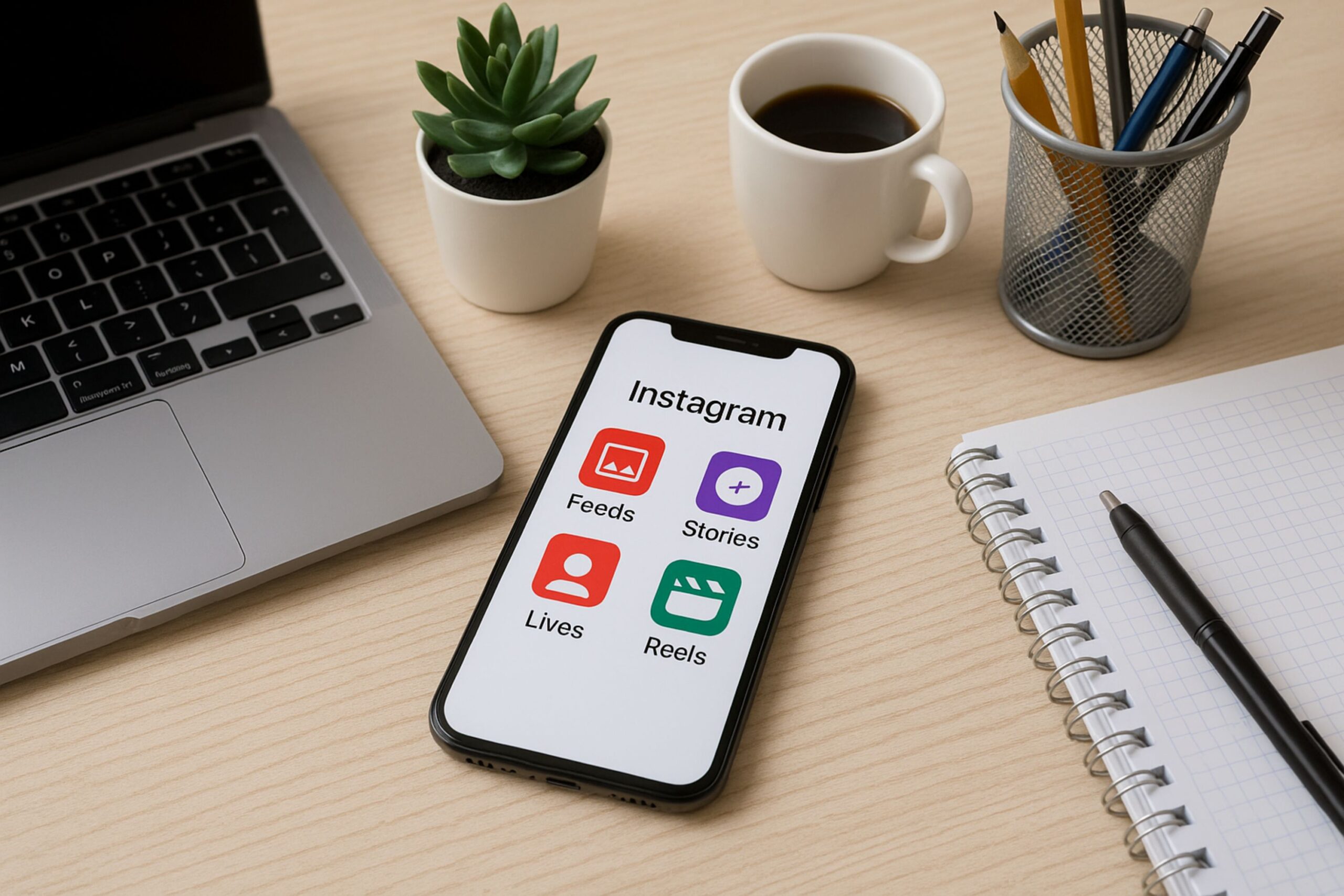
Light wood office desk with a smartphone displaying Instagram options for Feeds, Stories, Lives, and Reels, alongside a silver laptop, coffee cup, potted plant, pen holder, and notepad, representing social media content planning and Instagram marketing strategy.

How to Balance Feed Posts, Stories, Lives, and Reels on Instagram

Instagram gives you several powerful content formats—feed posts, Stories, Lives, and Reels—and each serves a distinct role in growing and engaging your audience. The real challenge isn’t knowing they exist; it’s figuring out how to split your time, creative energy, and posting frequency so that every format delivers results without overwhelming followers or stretching your…

Read More
What Is the Difference Between Paid and Organic Strategies

What Is the Difference Between Paid and Organic Strategies?

Paid strategies involve spending money to promote your content and reach specific audiences. Organic strategies rely on unpaid efforts, such as posting regularly, engaging with followers, and utilizing SEO techniques, to grow reach naturally. You can think of paid as acceleration and organic as momentum. If you’re running a campaign and want immediate results, paid…

Read More
error: Content is protected !!
×