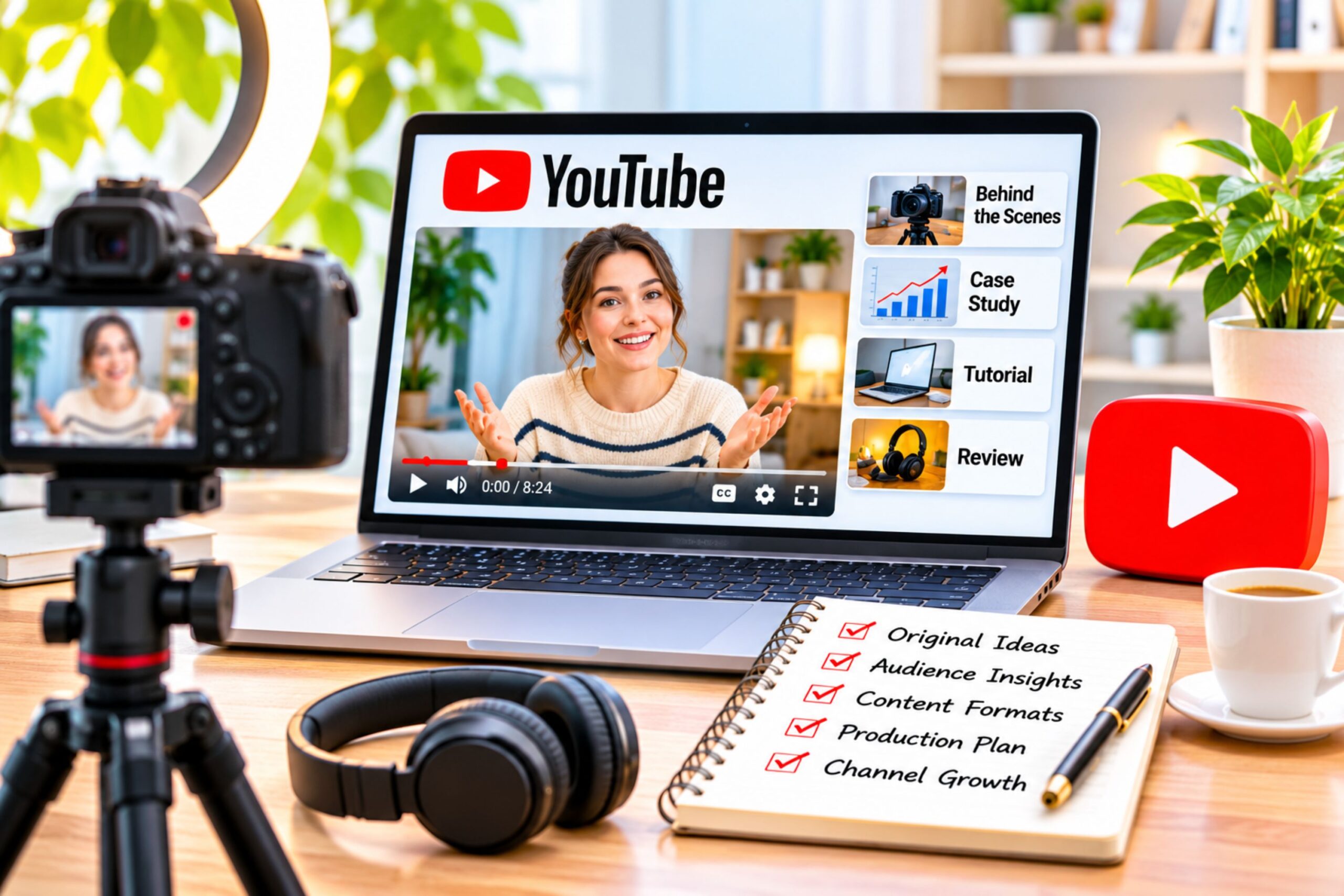
Unique content for YouTube provides original value through a creator’s own knowledge, experience, research, footage, commentary, or storytelling. It doesn’t require an entirely new subject; it requires a distinct contribution to a topic other channels may already cover.
For example, many creators publish videos about visiting Paris. A video comparing actual transport costs across three travel options offers a more specific perspective than another general city overview. Its value comes from original research, evidence, and practical conclusions.
A YouTube video can stand out through:
- Original research: Surveys, product comparisons, experiments, or collected data.
- First-hand experience: Real project footage, professional insights, personal observations, or documented results.
- Expert commentary: Explanations and opinions supported by relevant knowledge.
- Distinctive storytelling: A clear narrative, unusual perspective, or well-developed case study.
- Original production: Demonstrations, interviews, animations, or footage created for the video.
The strongest YouTube content combines a relevant audience topic with an identifiable original contribution.
How to Find Original YouTube Video Ideas
Original video ideas should come from audience needs, subject expertise, and information gaps, not from copying popular uploads.
Research Audience Questions
Use YouTube comments, customer enquiries, community discussions, and search suggestions to identify questions people want answered. Look for specific problems that existing videos address poorly or only briefly.
For a digital marketing channel, audience questions might include:
- Why do social media views increase without generating enquiries?
- How can a small business plan video content with a limited budget?
- What makes a product demonstration more useful than a promotional video?
These questions provide clearer video concepts than broad topics such as “social media marketing tips.” Exploring different social media content ideas can also help identify subjects that translate into useful video formats.
Analyse Existing Videos for Content Gaps
Review videos covering the same subject and examine their comments, explanations, examples, and presentation. Identify missing comparisons, unanswered questions, outdated information, or claims that lack evidence.
Do not reproduce another creator’s script or structure. Use existing videos to understand audience demand, then develop a different angle using original material.
For instance, instead of making another list of popular marketing tools, test three tools against the same business task and show the results.
Use Professional Knowledge and First-Hand Experience
Practical knowledge gives a channel access to material that generic research cannot fully reproduce.
A renovation specialist can document material selection and installation decisions. A software consultant can demonstrate a real workflow. A marketing agency can explain the decisions behind a campaign and present its results.
Documented projects can also become social media marketing case studies, showing the process, challenges, and measurable outcomes rather than presenting only a finished result.
6 Formats That Help Create Unique YouTube Content
The format should support the information being presented. A tutorial needs a clear demonstration, while a case study needs evidence, context, and results.
1. Original Experiments and Product Tests
Test products, services, methods, or tools under defined conditions. Explain what was tested, how the comparison worked, and what the results show.
Example: Compare three video editing tools by using each one to produce the same 30-second promotional video. Evaluate editing time, available features, output quality, and ease of use.
2. Case Studies With Verifiable Results
Document a real project from its starting point to its outcome. Include the objective, decisions, challenges, actions, and measurable results.
Example: Show how a small business changed its video content strategy over three months, including the formats tested and the audience response.
Obtain permission before sharing confidential client information, customer footage, or identifiable data.
3. Expert Interviews and Original Commentary
Invite professionals with relevant experience to discuss specific questions. Use interviews to introduce perspectives, practical examples, and knowledge that the channel cannot provide alone.
Prepare focused questions and add editorial context so the video offers more than an unstructured conversation.
4. Behind-the-Scenes Demonstrations
Show how a product, service, or project works in practice. Include decisions, tools, materials, and steps that viewers would not see in a finished promotional video.
For example, a design studio could show how it develops a website layout, from the initial brief to the final design.
5. Comparisons and Decision-Making Videos
Compare options using consistent criteria. Explain the differences that matter to the intended audience rather than presenting a list of features.
Useful subjects include software platforms, travel options, business services, equipment, materials, and production methods.
6. Original Educational Tutorials
Teach a specific skill through a practical demonstration. Use screen recordings, real examples, annotated footage, or step-by-step explanations.
A focused tutorial such as “How to add subtitles to a YouTube video” gives viewers a clear outcome and is easier to structure than a broad video about video editing.
How to Make YouTube Shorts Original
YouTube Shorts should deliver one clear idea, demonstration, or story without relying on a longer video for essential context.
Useful original Shorts formats include:
- Quick demonstrations: Show one technique, feature, or process.
- Before-and-after comparisons: Present a visible change and explain what caused it.
- One-question answers: Respond to a specific audience question.
- Short experiment results: Show the outcome of a test and its main conclusion.
- Expert observations: Explain one industry insight using a practical example.
A Short can be adapted from a longer video, but it should work as a standalone piece of content. Select a meaningful segment, add the context needed to understand it, and edit it for vertical viewing.
How to Use AI Without Making YouTube Content Generic
AI tools can assist with topic research, outlining, transcription, subtitles, editing, and visual production. They can also help creators organise research and explore alternative ways to explain a subject.
However, AI-generated scripts and visuals do not automatically make a video original. A creator still needs to contribute useful information, editorial decisions, evidence, or a distinctive creative perspective.
YouTube’s monetisation rules distinguish original content from mass-produced or repetitive material. Reused content can also create monetisation problems when it lacks significant original commentary, substantive changes, or educational or entertainment value.
A practical workflow is to use AI for initial research and production support, then add original examples, verify factual claims, record relevant footage, and review the final edit for accuracy and value.
How to Evaluate the Quality of Original YouTube Content
A video can attract views without building a relevant audience. Evaluate performance using metrics that match the video’s purpose.
| Metric | What it helps evaluate |
| Audience retention | Which sections keep viewers watching and where they leave |
| Average view duration | How long viewers watch on average |
| Returning viewers | Whether people come back to the channel |
| Subscribers gained | Whether a video encourages continued interest |
| Comments | Questions, feedback, and audience response |
| Traffic sources | How viewers discover the video |
Use YouTube Analytics to compare videos with similar topics and formats. For business channels, also monitor relevant outcomes such as website visits, enquiries, and conversions through appropriate tracking.
Avoid judging originality by views alone. A detailed tutorial with a smaller but relevant audience may provide more business value than a widely viewed video that attracts people outside the target market. You should consider these results alongside the social media metrics that matter most, especially when evaluating the wider impact of video marketing.
How to Build a YouTube Content Strategy Around Originality
A practical content strategy connects audience questions with the knowledge and resources available to the creator.
- Define the audience: Identify the people the channel needs to reach and the problems they want to solve.
- Choose content themes: Select a few relevant subject areas that match the channel’s expertise.
- Research video opportunities: Review audience questions, competitor coverage, and information gaps.
- Choose the right format: Use demonstrations for practical tasks, comparisons for buying decisions, and case studies for project results.
- Add original material: Include first-hand footage, data, expert commentary, or documented experience.
- Review performance: Use audience retention, returning viewers, and relevant business outcomes to improve future videos.
A social media communication strategy can help connect YouTube topics with the wider brand message, target audience, and other social channels.
Common Mistakes That Reduce YouTube Content Originality
Copying competitors: Reproducing another channel’s ideas, script, and presentation gives viewers little reason to choose the new video.
Publishing generic AI-generated videos: Automated scripts, stock footage, and repetitive templates can produce interchangeable uploads without meaningful original contribution.
Following trends without relevance: A popular trend may attract temporary attention but fail to serve the channel’s intended audience.
Reusing clips without adding value: Minimal edits to someone else’s footage don’t necessarily create original content or meet YouTube’s reused-content monetisation requirements.
Repeating the same idea in different formats: Changing a video’s length or aspect ratio does not create a new concept. Each upload should offer a distinct takeaway, example, or purpose.
Prioritising volume over quality: A high publishing frequency cannot compensate for weak research, inaccurate information, or repetitive videos.
FAQs About Unique Content for YouTube
Does YouTube require every video to be completely new?
No. Creators can cover established topics and use recurring formats. The important factor is the original value in each video, such as new research, commentary, examples, or a distinct storyline.
Can faceless YouTube channels create unique content?
Yes. Originality does not depend on showing the creator’s face. Screen recordings, animations, original footage, demonstrations, narration, and research-based storytelling can all provide original value.
Is using stock footage considered unique content?
Stock footage can support an original video, but footage alone does not establish originality. The creator should add meaningful narration, analysis, storytelling, or educational context.
Can creators use the same video on YouTube and other social platforms?
Yes, if they own the content or have the necessary rights. Adapt the format, captions, pacing, and context to each platform instead of uploading an identical version without considering how its audience consumes video.
Does AI-generated content qualify for YouTube monetisation?
AI-assisted content can be monetised if it meets YouTube’s policies. Mass-produced, repetitive, or reused videos that lack meaningful original contribution may be ineligible. Creators should also follow applicable disclosure requirements for altered or synthetic content.
How can a small business create original YouTube videos without a production team?
Use a smartphone, natural lighting, a basic microphone, and a clear recording plan. Product demonstrations, customer FAQs, project updates, staff expertise, and process videos can provide useful original material without a large production budget.
🚀 Subscribe for fresh strategies—🆕 new articles straight to your inbox, ✅ zero clutter.