Facebook Events are one of the most overlooked tools for increasing organic reach on a Facebook page. While many brands focus only on posts, videos, or ads, events create a structured interaction format that encourages users to engage, share, and invite others.
When people respond to an event, mark themselves as interested, or share it with friends, Facebook interprets this activity as strong engagement. These signals can expand the visibility of both the event and the page that created it.
For businesses, creators, and community organizers trying to grow organically, events provide a powerful way to generate discussion and increase interaction without relying on paid promotion.
The following strategies explain how Facebook Events influence organic reach and how they can be integrated into a broader page growth strategy.
Key Takeaways: Facebook Events and Organic Reach
- Facebook Events create multiple engagement signals such as responses, comments, and shares.
- When users mark themselves as “Interested” or “Going,” their friends can see that activity.
- Events generate recurring visibility through reminders and updates.
- Live discussions around events increase page interaction and community engagement.
- Events often attract new followers who discover the page through shared invitations.
- Combining events with strong social media engagement strategies can significantly expand organic reach.
Can Facebook events help increase organic page reach?
Yes. Facebook events can increase organic page reach because they generate multiple engagement signals that the Facebook algorithm prioritizes. When users interact with an event—by clicking Interested, selecting Going, commenting, or sharing the event—those actions create activity that can appear in the news feeds of their friends.
Each interaction acts as a visibility signal. Facebook may display messages such as “John is interested in this event” or “Anna is going to this event”, which introduces the event and the associated Facebook page to new audiences.
Unlike regular Facebook posts that appear briefly in the feed, Facebook events create repeated exposure through event reminders, updates, and notifications. These recurring interactions increase the chances that users will return to the event page, engage again, or invite friends.
For example, when someone marks an event as Interested, their friends may see that activity in their feed. If those friends click on the event, they are taken directly to the event page, where they can respond, comment, or follow the hosting page.
Because Facebook events combine RSVP responses, comments, invitations, and event sharing, they often generate stronger social media engagement signals than standard posts. This sustained interaction helps expand organic visibility and can attract new followers to the page hosting the event.
Why do Facebook events create stronger engagement signals?
Facebook’s algorithm evaluates how people interact with content. Events naturally produce several types of engagement signals at once.
These signals include:
- event responses (Interested or Going)
- comments on the event page
- event shares
- invitations sent to friends
- reminders and notifications
Each interaction tells Facebook that the content is meaningful to users.
When engagement grows, the algorithm is more likely to distribute the event to additional users, which increases organic reach.
This mechanism works similarly to other social media strategies for effective online engagement
that rely on conversation and participation.
How do Facebook events attract new audiences?
One of the biggest advantages of events is their ability to reach people beyond a page’s existing followers.
When users interact with an event, Facebook may show that activity in the news feed of their friends.
Example:
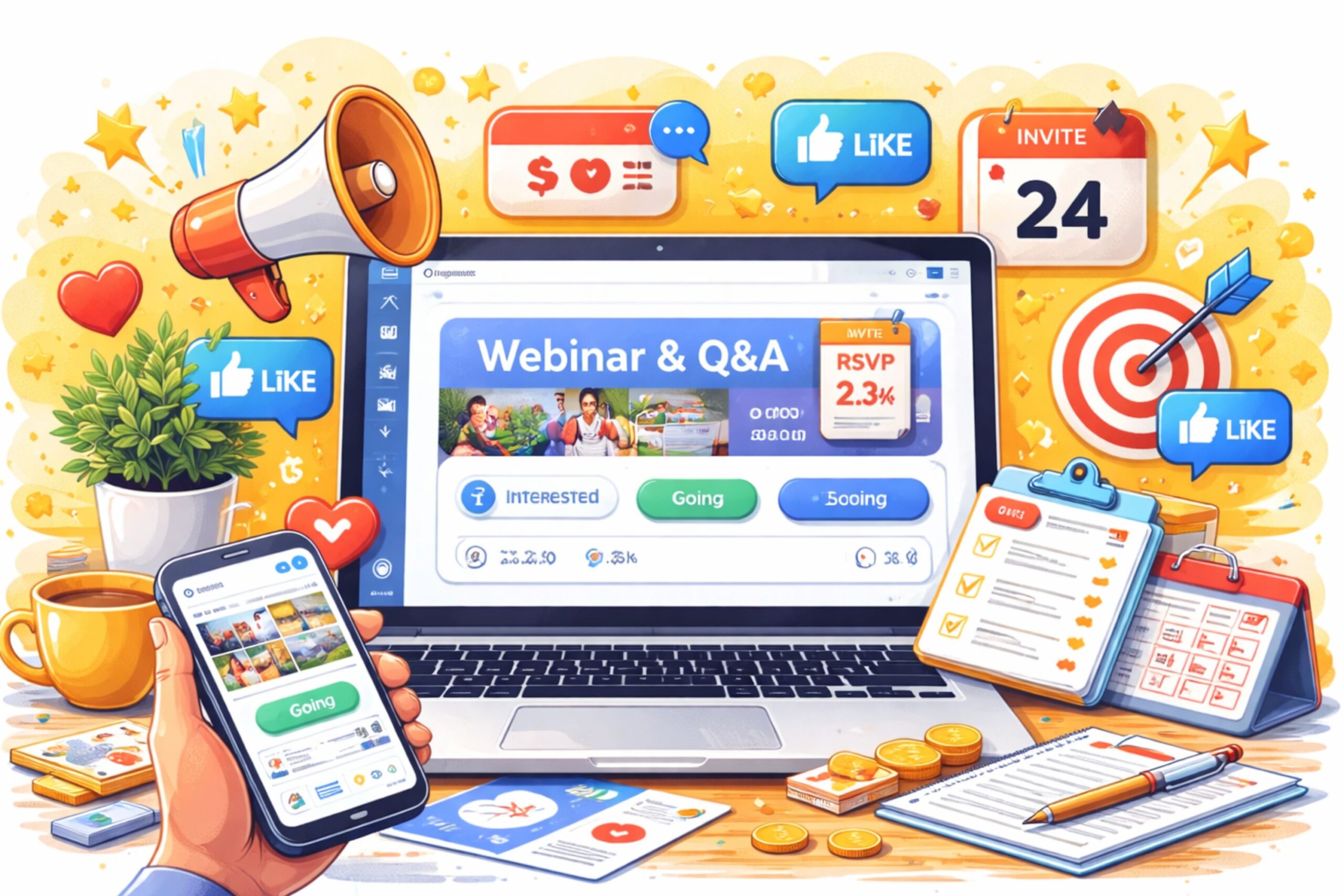
If a user marks themselves as “Going” to a webinar, their friends may see a notification such as:
“Anna is interested in this event.”
This visibility exposes the event—and the page hosting it—to people who may have never encountered the brand before.
As a result, events often bring in new followers and increase overall page visibility.
What types of Facebook events generate the most organic reach?
Certain types of events consistently attract stronger engagement.
Live webinars and educational sessions
Educational events perform well because they provide clear value.
For example:
- marketing workshops
- product demonstrations
- industry discussions
Educational content aligns with broader social media content ideas that encourage participation and learning.
Community discussions
Events that invite conversation often generate higher engagement.
Examples include:
- Q&A sessions
- community meetups
- discussion panels
These formats encourage users to ask questions and interact with both the host and other participants.
Product launches and announcements
Launching a product or announcing a new service through an event creates anticipation.
Followers often share these events with friends who might be interested in the product.
This sharing behavior significantly expands organic reach.
How do Facebook Groups strengthen event visibility?
Facebook Groups can amplify the impact of events.
When an event is shared within an active group, members often discuss it, ask questions, and invite others to participate.
This activity generates additional engagement signals and increases the likelihood that the event will appear in more users’ feeds.
Groups also create a sense of belonging, which encourages users to attend future events.
How can event updates increase organic visibility?
Facebook Events allow hosts to post updates before the event takes place.
Each update appears in the feeds of people who have marked themselves as interested or attending.
These updates might include:
- event reminders
- speaker announcements
- new information about the topic
- behind-the-scenes content
Frequent updates keep the event visible and maintain engagement before the event even begins. This repeated interaction strengthens overall page activity.
What role do conversations play in Facebook event reach?
Discussions within an event page significantly influence organic visibility.
When participants ask questions or comment on event posts, those interactions signal activity to Facebook’s algorithm.
Hosts who actively respond to comments often see stronger engagement.
For example:
User comment
“Will the webinar cover beginner strategies?”
Host response
“Yes, we will include beginner tips and practical examples.”
This exchange encourages additional users to join the conversation.
Active discussions are also a key part of strong social media engagement strategies used by successful brands.
What mistakes reduce the reach of Facebook events?
Several common mistakes can significantly reduce the organic reach of Facebook events. When events fail to generate interaction, the Facebook algorithm distributes them to fewer users. The most frequent problems include unclear event purpose, weak promotion, and lack of engagement with participants.
Below are the key mistakes that limit the visibility of Facebook events.
Creating events without a clear purpose
Events that lack a clear objective rarely attract attention or participation. Users need to immediately understand what the event offers and why it is worth attending.
A strong Facebook event should clearly communicate:
- the topic or activity
- the value participants will receive
- who the event is for
- when and where it takes place
For example, an event titled “Social Media Growth Webinar for Small Businesses” is much more compelling than a vague title like “Online Event.”
When the event description explains the benefits—such as learning practical marketing strategies or participating in a live Q&A—users are far more likely to respond, comment, and share the event.
Without a clear value proposition, Facebook users often scroll past the event without interacting.
Promoting the event only once
Many event organizers create a Facebook event and share it only once. This limits exposure because most followers may not see the original post.
Effective event promotion requires multiple touchpoints, including:
- announcement posts when the event is created
- reminder posts leading up to the event
- updates with new details or speakers
- countdown posts shortly before the event begins
Each additional post generates new engagement signals such as reactions, comments, and shares. These signals help Facebook distribute the event to a wider audience.
Consistent promotion also increases the likelihood that users will invite friends, expanding organic reach even further.
Ignoring participant questions and comments
Engagement within the event page plays a major role in how widely the event is shown.
When participants ask questions in the discussion section, responding quickly encourages further interaction. Active conversations signal to Facebook that the event is generating interest.
Examples of helpful responses include:
- clarifying event details
- answering participant questions
- encouraging attendees to share their expectations
If questions remain unanswered, users may lose interest or assume the event is inactive.
Active interaction keeps the discussion moving and increases the chances that the event will appear in more news feeds.
Best strategy for using Facebook events to grow organic reach
The most effective Facebook event strategy for organic reach focuses on generating engagement signals and encouraging community interaction. Facebook’s algorithm prioritizes events that attract comments, responses, shares, and invitations, so the goal is to create activity before and during the event.
Start by creating events that deliver clear value to the audience. Educational webinars, live Q&A sessions, product demonstrations, and community discussions tend to generate higher engagement because participants gain useful information or direct interaction.
Next, promote the event consistently across your Facebook page. Instead of sharing the event once, publish multiple posts leading up to the event date. Event reminders, speaker announcements, countdown posts, and behind-the-scenes updates help keep the event visible in followers’ feeds.
Encouraging interaction is equally important. Ask participants questions, invite them to share their expectations, and prompt them to tag friends who may be interested. When users mark themselves as Interested or Going, Facebook may show that activity to their network, expanding organic exposure.
Active moderation also plays a key role. Respond quickly to comments and questions in the event discussion section. These conversations create additional engagement signals that help Facebook distribute the event more widely.
When these tactics are combined – valuable content, consistent promotion, audience interaction, and active responses – Facebook Events become a powerful tool for increasing organic page reach, attracting new followers, and strengthening social media community engagement.
FAQs
How do Facebook event responses influence the Facebook algorithm?
Facebook event responses such as “Interested” and “Going” act as engagement signals that influence how widely an event is distributed. When users respond to an event, Facebook may display that activity in their friends’ feeds, increasing visibility. High response rates indicate that the event is relevant, which can improve both event reach and the organic visibility of the page hosting it.
Can Facebook events improve Facebook page discoverability in search?
Yes, Facebook events can improve page discoverability in Facebook search results. Events often contain keywords, locations, dates, and topic descriptions that make them easier to index within the platform. When users search for activities, webinars, or community gatherings related to a topic, relevant events may appear in the results, exposing the associated Facebook page to new audiences.
What event description elements help increase organic Facebook reach?
A well-structured event description can significantly improve engagement and discoverability. Effective descriptions typically include a clear event topic, relevant keywords, a short agenda, and a compelling reason to attend. Providing details about speakers, benefits, or discussion topics encourages users to interact with the event and share it with others.
How can event invitations expand Facebook audience reach?
Event invitations allow participants to invite friends who might be interested in the topic. Each invitation expands the event’s exposure to new networks of users. When multiple participants invite others, the event can reach audiences far beyond the original followers of the page, helping grow the page organically.
Does adding visuals to a Facebook event improve engagement?
Yes, visual elements such as event cover images, short preview videos, or speaker graphics often improve engagement. Visual content attracts attention in the feed and helps users quickly understand the purpose of the event. High-quality visuals can increase event clicks, responses, and shares.
Can Facebook events support long-term community growth?
Facebook events can contribute to long-term community growth when they encourage recurring interaction. Hosting regular discussions, workshops, or live sessions helps create a habit among followers to return to the page. Over time, these repeated interactions strengthen the page’s community and improve organic engagement.
How do event discussions contribute to organic social media engagement?
Event discussions allow participants to ask questions, share ideas, and interact with the host. Each comment creates additional engagement signals that may increase visibility in the Facebook feed. Active discussions also encourage other users to join the conversation, which further expands reach.
What analytics should be monitored to evaluate Facebook event performance?
Key metrics for evaluating event performance include event responses, reach, engagement rate, comment activity, and shares. Monitoring these indicators helps identify which types of events generate the most interaction and which topics attract the largest audiences.
Can Facebook events drive traffic to other social media platforms?
Yes, Facebook events can help direct audiences to other platforms such as Instagram, LinkedIn, or YouTube. For example, an event promoting a live discussion or webinar may include links to additional content hosted on other channels. This cross-platform exposure strengthens overall social media visibility.
How can collaboration events increase Facebook organic reach?
Collaborative events hosted with other creators, brands, or communities often generate larger audiences. When multiple pages promote the same event, each partner contributes their own followers. This combined promotion increases engagement and introduces the event to new potential followers.
Why do recurring Facebook events strengthen organic page authority?
Recurring events demonstrate consistent activity on a Facebook page. Regular events signal to the algorithm that the page maintains ongoing interaction with its audience. Over time, this consistency can strengthen the page’s authority within its niche and improve organic reach across posts and events.
🚀 Subscribe for fresh strategies—🆕 new articles straight to your inbox, ✅ zero clutter.