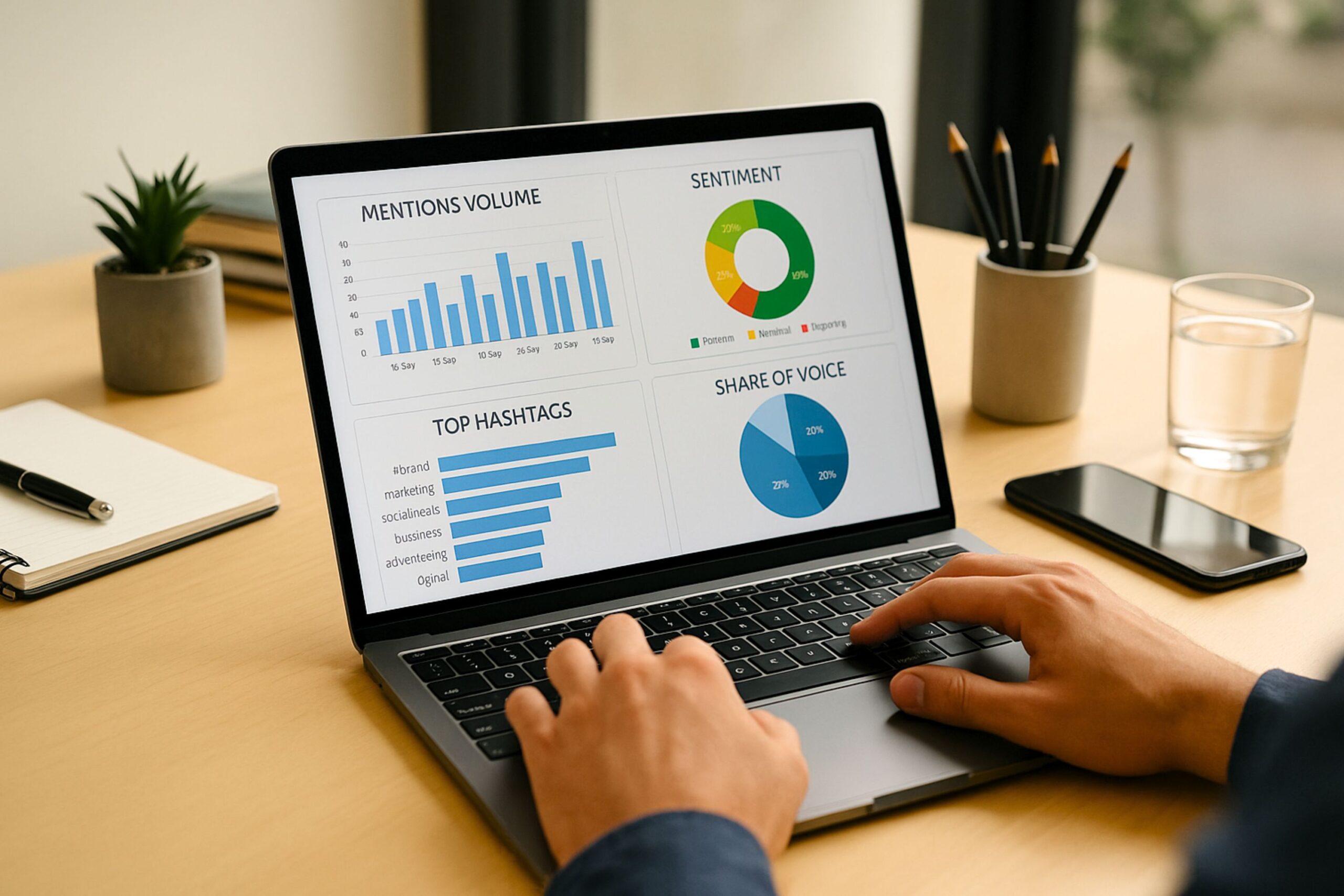
AI is reshaping how marketers evaluate social media campaigns by moving beyond traditional metrics and offering actionable, data-driven insights. Unlike standard dashboards that only report likes, shares, and impressions, AI connects multiple performance signals – engagement timing, audience behavior, content type, and sentiment – to explain trends, predict outcomes, and optimize strategies in real time.
By processing structured data (clicks, conversions, watch time) and unstructured data (text, images, video), AI builds a complete performance context, enabling smarter decisions.
It can forecast engagement probabilities, recommend optimal posting times, detect anomalies, and generate automated reports that highlight key insights while saving time on manual analysis.
AI analyzes social media campaigns by interpreting complex data patterns, identifying trends, and predicting audience engagement. It leverages structured metrics – such as clicks, conversions, watch time, and posting frequency—and unstructured data, including text, images, and video content, to provide a comprehensive performance context.
Through predictive and diagnostic capabilities, AI recommends optimal posting times, forecasts engagement, detects anomalies, and highlights sentiment trends, allowing marketers to make informed, data-driven decisions.
Why isn’t traditional social media analytics enough anymore?
Traditional social media analytics are no longer enough because they describe past performance without explaining the causes or guiding future decisions. They report outcomes but do not interpret behavior or predict what will happen next.
Most native analytics dashboards focus on surface-level indicators such as likes, impressions, reach, and follower growth.
These social media metrics are useful for tracking visibility, but they lack contextual depth. They do not account for audience intent, content relevance, or timing sensitivity, which are critical for campaign optimization.
AI-driven social media analysis connects multiple performance signals into a single analytical framework.
It evaluates engagement timing, audience interaction patterns, content format effectiveness, posting frequency, and sentiment data together, rather than in isolation. This allows marketers to move from descriptive metrics to diagnostic and predictive insights.
For example, a traditional dashboard may show a decline in engagement over two weeks.
An AI system can identify that the drop correlates with a change in posting time, reduced content format diversity, and lower audience activity during those hours, providing a clear explanation and actionable direction.
How does AI analyze social media campaign performance differently?
AI analyzes social media campaign performance differently by interpreting large volumes of data in context and learning from historical results to identify patterns, relationships, and future outcomes. Instead of reviewing isolated metrics, AI builds models that explain performance and anticipate change.
Rather than producing static reports, AI systems continuously evaluate dynamic performance signals across campaigns and platforms.
These signals include engagement velocity, which measures how quickly users react after content is published, and content-type performance across formats such as video, carousel, image, and text posts.
AI also examines audience interaction patterns, including repeat engagement, comment behavior, and response depth, alongside temporal behavior such as day of the week, hour of publication, and posting frequency.
This layered analysis reveals when, how, and why specific content performs better with a given audience.
AI does not replace traditional metrics like reach or engagement rate. It connects them into diagnostic and predictive models that explain cause-and-effect relationships.
For example, an AI tool can analyze 12 months of campaign data and forecast which post format is most likely to achieve higher engagement in the coming week based on historical audience responses and timing patterns.
What data does AI use to evaluate campaign performance?
AI evaluates social media campaign performance by integrating structured and unstructured data from multiple sources to provide a comprehensive view of audience behavior and content effectiveness.
It does not rely on single metrics but synthesizes data to reveal patterns and insights.
Structured data includes measurable indicators such as likes, comments, shares, saves, click-through rates, conversions, watch time, and video completion rates.
Posting schedules, frequency, and timing are also tracked to identify temporal performance patterns.
Unstructured data comes from text, images, videos, and other multimedia content, and AI processes it using natural language processing (NLP) and computer vision techniques.
This allows sentiment detection, topic classification, visual content analysis, and engagement trend recognition.
AI also considers audience demographics and behavioral data, including location, age, interests, and interaction history.
By combining these structured and unstructured inputs, AI builds a full performance context rather than analyzing isolated metrics, enabling predictive insights and informed campaign optimization.
Can AI predict engagement before a campaign is published?
Yes, AI can predict engagement before a campaign goes live by analyzing historical performance data and recognizing patterns that indicate how audiences are likely to respond.
These predictions rely on statistical modeling rather than intuition, offering data-driven guidance for content planning.
Predictions are based on factors such as the performance of similar past content, audience interaction history, platform-specific behavior trends, and content characteristics such as format, length, and media type.
AI estimates the probability of engagement outcomes rather than providing absolute certainty, helping marketers make informed decisions.
For example, before publishing, an AI system can compare two caption variations for the same post.
By analyzing prior audience responses to similar wording, hashtags, and media formats, it recommends the caption with the highest predicted engagement rate.
This approach helps marketers to optimize content for maximum reach, clicks, and interaction before any post goes live.
How does AI help optimize posting times?
AI helps optimize posting times by analyzing audience activity patterns and identifying the moments when content is most likely to generate engagement. It moves beyond generic “best time to post” advice, offering tailored insights for each account and campaign.
AI evaluates account-specific engagement history, including when followers are most active, how quickly they respond, and which types of content perform best at different times.
It also accounts for platform-specific algorithms that influence content visibility, ensuring posts reach the right audience when they are most likely to interact.
Time-zone distribution is another key factor, allowing AI to schedule posts for audiences across multiple regions.
Additionally, AI considers content-type sensitivity to timing, as videos, carousels, and images may perform differently depending on the hour of publication.
AI creates adaptive posting schedules that adjust dynamically based on audience behavior and platform changes, maximizing reach and interaction while reducing the guesswork in campaign planning.
What role does sentiment analysis play in campaign evaluation?
Sentiment analysis allows AI to evaluate audience reactions by interpreting how people feel about content, rather than simply measuring interactions. This adds an emotional layer to performance insights, helping marketers understand the quality and impact of engagement.
AI models classify comments, replies, mentions, and other user-generated content into sentiment categories such as positive, neutral, or negative.
Advanced systems can also detect nuanced emotional signals, including frustration, enthusiasm, confusion, or excitement, providing a deeper understanding of audience perception.
High engagement is not always positive; for example, posts generating many comments or shares with predominantly negative sentiment may indicate a reputational risk.
Combining engagement metrics with sentiment analysis, AI helps teams identify content that resonates positively, flag potentially harmful reactions, and make informed adjustments to campaign strategies.
How does AI detect anomalies in social media campaigns?
AI detects anomalies by continuously monitoring performance metrics and identifying deviations from expected patterns.
These anomalies can indicate sudden changes in audience behavior, content reception, or potential risks that require immediate attention.
Common anomalies include sudden spikes in engagement, unexpected drops in reach, rapid surges in comments with negative sentiment, and irregular traffic sources that may suggest spam, bots, or coordinated campaigns.
AI uses historical data and predictive models to distinguish normal fluctuations from significant outliers.
For example, an AI system can flag a sudden spike in comments on a post and determine that many of them originate from coordinated accounts expressing negative sentiment.
This early detection enables marketing teams to respond promptly, mitigating reputational risks and adjusting content strategies before issues escalate.
Does AI automate social media performance reporting?
Yes, AI automates social media performance reporting by generating insights, summaries, and comparisons without requiring manual data compilation.
This streamlines workflows and allows teams to focus on strategic decision-making rather than routine analysis.
AI-generated reports summarize key outcomes, such as engagement rates, reach, conversions, and content performance trends.
They also highlight anomalies, flagging unexpected spikes, drops, or negative sentiment that may need immediate attention.
Additionally, AI can automatically compare multiple campaigns across platforms, providing clear, side-by-side performance insights.
Reducing the time spent on manual spreadsheet work, AI enables marketing teams to prioritize optimization, creative adjustments, and audience engagement strategies.
Reports can be delivered in various formats, including dashboards, charts, and automated summaries, making the information accessible and actionable for all stakeholders.
FAQs
How can AI identify the most engaging content formats for different audiences?
AI analyzes historical performance across content types—videos, images, carousels, and text posts—while considering audience demographics, interaction patterns, and platform algorithms. It ranks formats based on predicted engagement, allowing marketers to prioritize content that resonates with each segment.
Can AI measure the long-term impact of social media campaigns on brand perception?
Yes. AI tracks sentiment trends, mentions, and engagement over time to assess shifts in brand perception. It can identify patterns indicating increased trust, awareness, or potential reputational risks, helping marketers understand the broader influence of campaigns.
How does AI integrate cross-platform data for unified campaign insights?
AI consolidates data from multiple platforms – Facebook, Instagram, TikTok, LinkedIn, Twitter – normalizes metrics, and identifies performance patterns. This enables marketers to compare reach, engagement, and conversion across channels and optimize campaigns holistically.
Can AI detect fake or inauthentic engagement on social media?
Yes. AI detects anomalies such as unusual interaction spikes, bot-generated comments, or coordinated engagement. By flagging these behaviors, marketers can differentiate genuine audience responses from inauthentic activity, ensuring more accurate performance analysis.
How does AI use predictive analytics to improve ad targeting?
AI predicts which audience segments are most likely to engage or convert by analyzing past behaviors, content preferences, and demographic signals. This allows marketers to refine targeting strategies, optimize ad spend, and improve ROI on social media campaigns.
Can AI evaluate the performance of hashtags and keywords in campaigns?
Yes. AI tracks hashtag and keyword usage, engagement rates, and reach across posts. It identifies which terms drive visibility and interaction, helping marketers select high-performing keywords for future campaigns and content optimization.
How does AI support real-time campaign adjustments?
AI monitors live metrics such as engagement, sentiment, and reach. It can trigger alerts or recommend immediate adjustments—like modifying posting times, boosting high-performing posts, or pausing low-performing content—to maximize campaign effectiveness in real time.
Can AI identify emerging trends and viral opportunities for campaigns?
Yes. AI analyzes social conversations, trending topics, and viral content patterns to detect opportunities for timely, relevant content. Marketers can leverage these insights to create campaigns that align with current audience interests and platform trends.
How does AI quantify audience loyalty and retention on social media?
AI tracks repeat engagement, returning visitors, and interaction consistency across campaigns. It identifies high-value followers and advocates, providing metrics for audience retention and loyalty that help optimize long-term social media strategies.
Can AI evaluate visual and multimedia content effectiveness beyond text analysis?
Yes. AI uses computer vision and image recognition to assess visuals, video engagement, and multimedia appeal. It measures factors like visual clarity, composition, and viewer attention patterns, enabling marketers to optimize creative assets for maximum audience im
🚀 Subscribe for fresh strategies—🆕 new articles straight to your inbox, ✅ zero clutter.