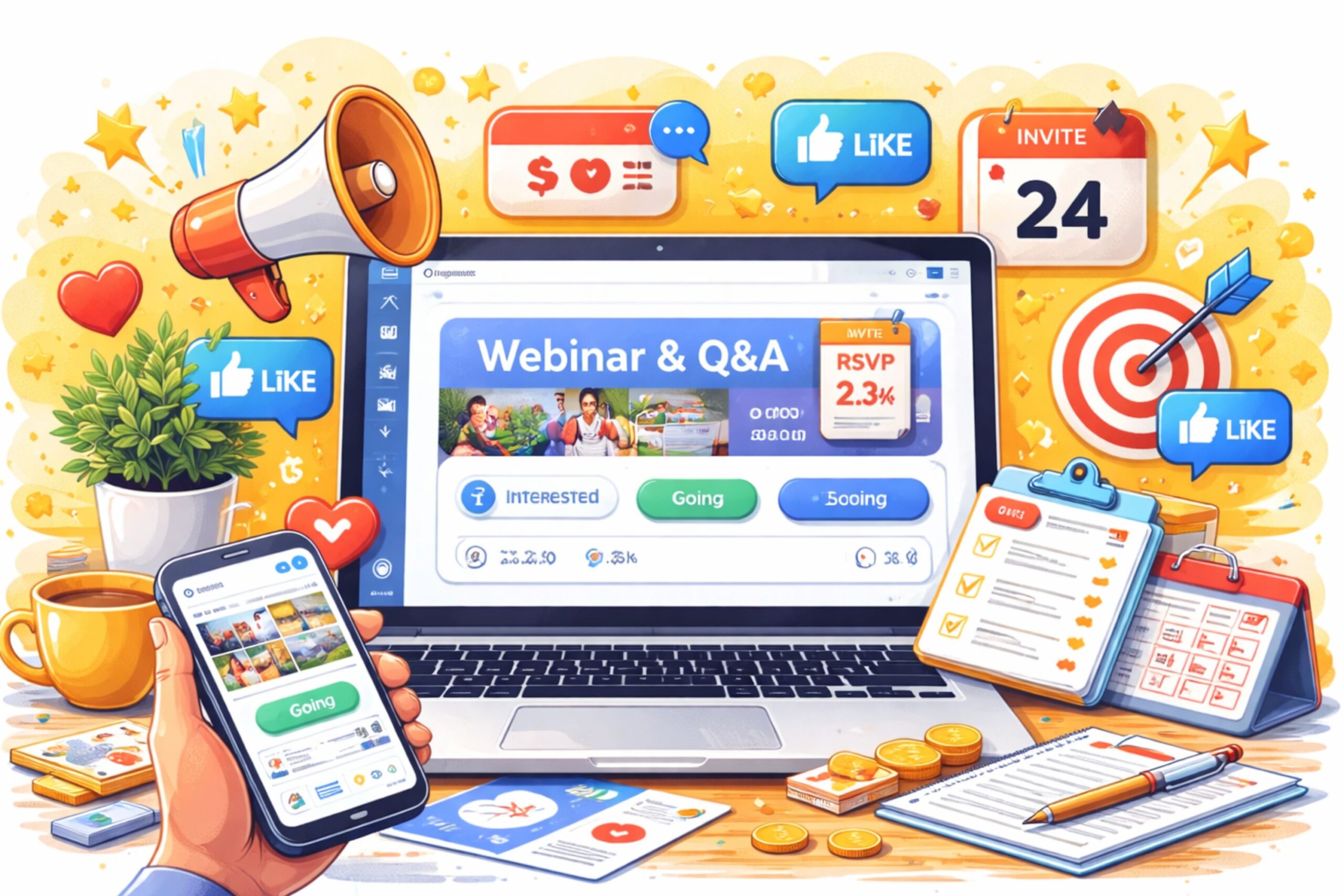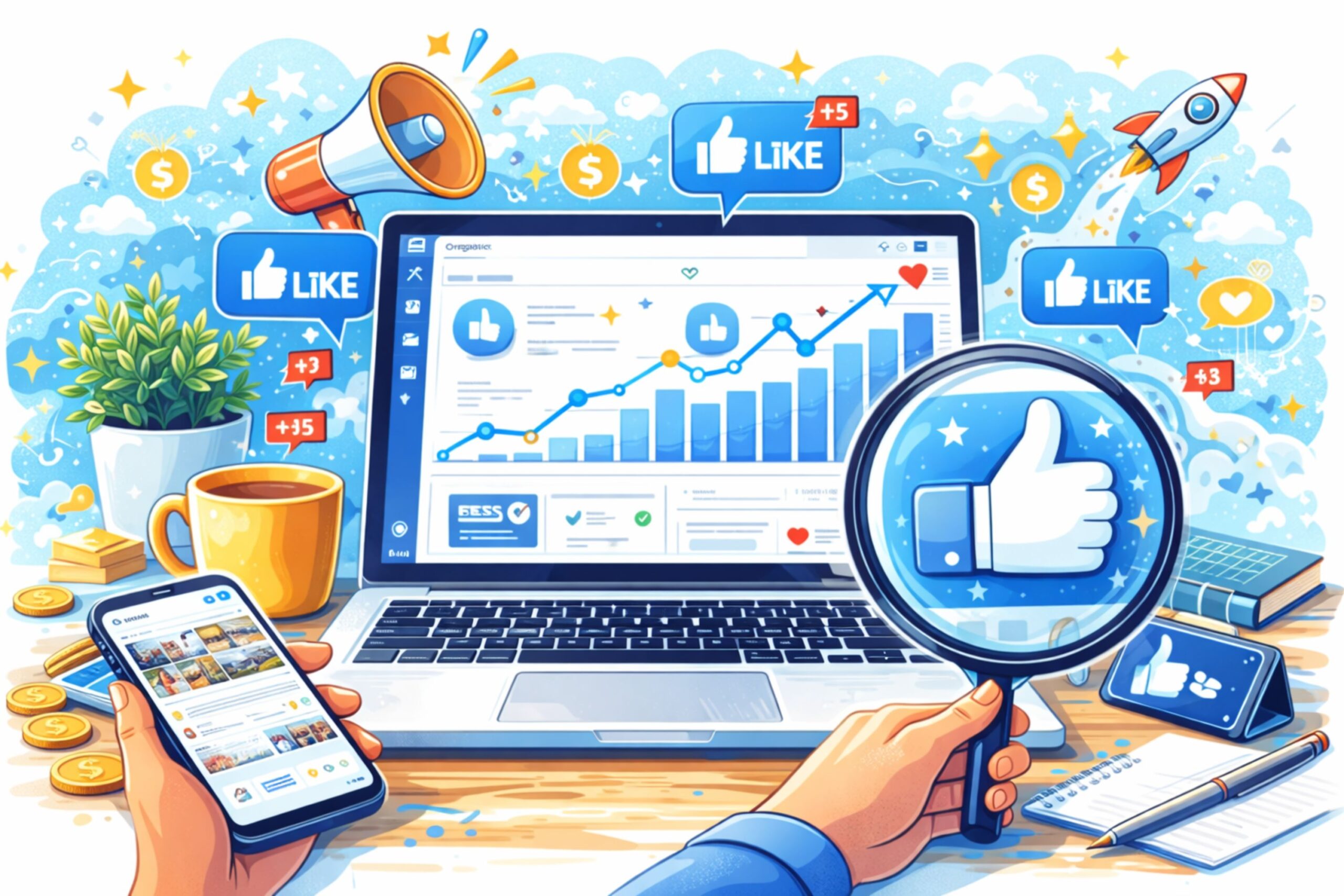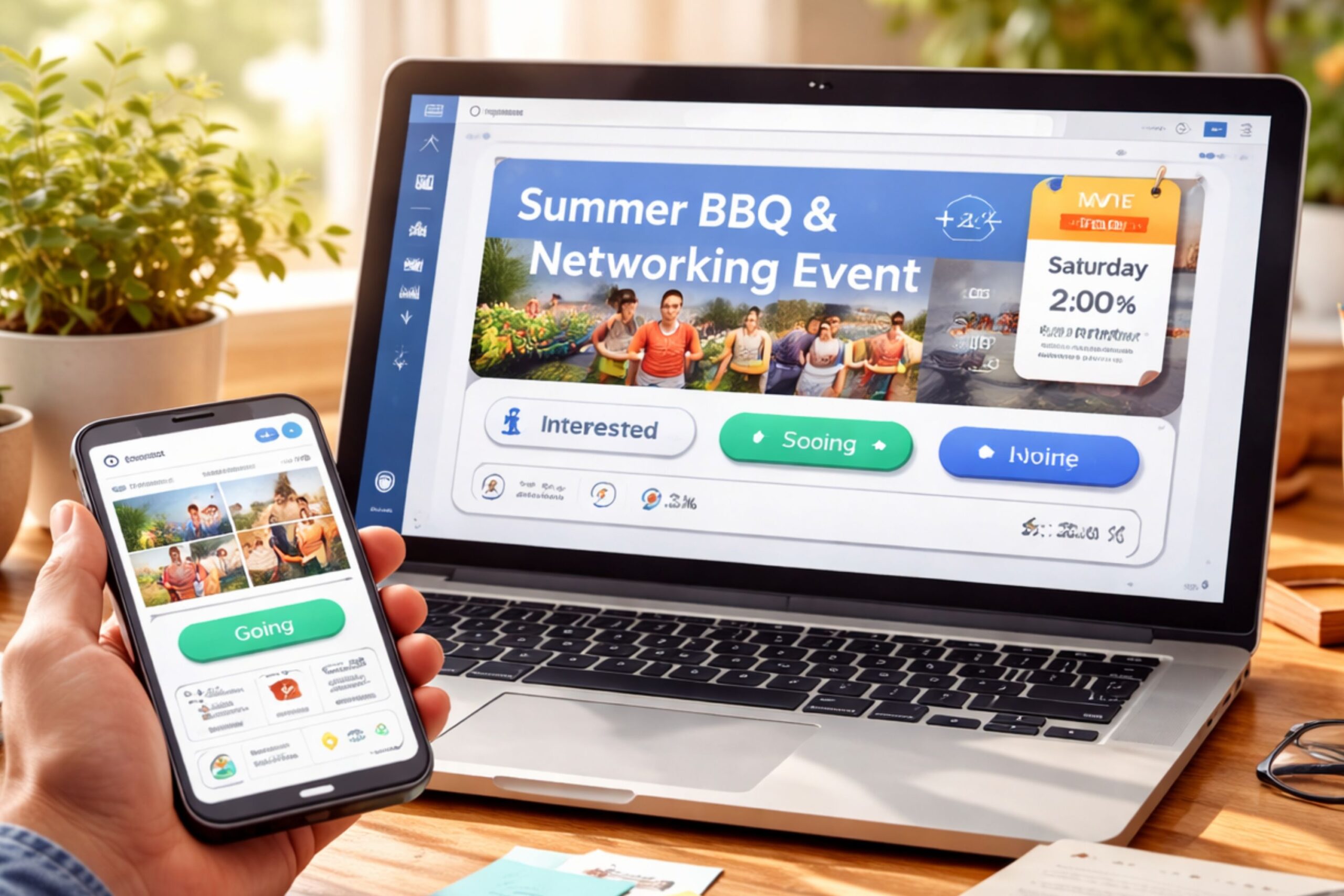
Facebook event responses play an important role in how the platform determines which events and pages receive organic visibility. When users interact with an event by selecting Interested, Going, commenting, or sharing it, those actions generate engagement signals that the Facebook algorithm evaluates.
These signals help Facebook determine whether the event is relevant and worth showing to additional users. Because events generate several interaction types simultaneously, they often receive more algorithm attention than standard posts.
Understanding how these engagement signals work helps businesses and creators improve organic reach and strengthen their Facebook page growth strategy.
Key Takeaways: Facebook Event Responses and Algorithm Visibility
- Event responses such as Interested and Going are strong engagement signals for the Facebook algorithm.
- When users respond to events, Facebook may display that activity to their friends.
- Event discussions and comments increase social media interaction signals.
- Invitations expand event visibility across new networks.
- Frequent event engagement improves overall page activity.
- Facebook events contribute to broader social media campaign performance signals across the platform.
How do Facebook event responses influence the Facebook algorithm?
Facebook event responses influence the algorithm because they signal that users are interested in the event content. Each response—such as selecting Interested, choosing Going, or commenting—counts as a meaningful engagement action.
The Facebook algorithm analyzes these actions to determine whether the event should be shown to a wider audience. If an event receives a high number of responses in a short time, Facebook may increase its visibility within the news feed and event discovery sections.
For example, when someone clicks Interested, Facebook may show that activity to their friends with a notification such as “Maria is interested in this event.” This social signal introduces the event and the hosting page to additional users who may also interact with it.
Because of this network exposure, Facebook event responses often help expand organic page reach and contribute to broader social media campaign performance signals that marketers track when evaluating engagement.
Why does Facebook prioritize event engagement signals?
Facebook’s algorithm is designed to prioritize content that generates meaningful interaction between users. Event responses are valuable because they combine several types of engagement at once.
These engagement signals may include:
- RSVP responses
- comments in the event discussion section
- shares of the event page
- invitations sent to friends
- repeat visits to the event page
When Facebook detects multiple engagement signals around a single event, it interprets the activity as strong user interest.
Events that generate ongoing interaction are therefore more likely to appear in user feeds, recommendations, or event discovery sections.
This engagement behavior also contributes to broader insights that marketers evaluate when analyzing how to measure success of a social media campaign because engagement metrics often determine how widely content spreads on the platform.
How do “Interested” and “Going” responses increase event reach?
The Interested and Going buttons are essential features that drive Facebook event visibility.
When a user clicks one of these options, several algorithm signals are triggered. First, the response is recorded as engagement with the event. Second, Facebook may display the response in the news feeds of the user’s friends.
For example, friends may see a message like:
“Alex is going to this event.”
This notification creates curiosity and encourages additional users to explore the event page.
Additionally, users who select Interested or Going receive reminders about the event. Each reminder can lead to new engagement actions, such as commenting or inviting friends.
These repeated interactions help strengthen event visibility and contribute to the overall performance of the page hosting the event.
How do Facebook event discussions affect algorithm ranking?
Event discussions are one of the most influential factors in event visibility. When participants comment on an event, ask questions, or respond to others, Facebook recognizes the activity as meaningful interaction.
These conversations signal that users are actively engaging with the event topic.
Examples of engagement that influence algorithm ranking include:
- asking questions about the event schedule
- discussing the event topic with other participants
- tagging friends who might be interested
- responding to comments from the host
When discussions become active, Facebook may distribute the event more widely because it appears relevant to users.
Strong discussion activity also contributes to broader case studies and results in social media marketing, where engagement patterns demonstrate how interaction drives content visibility.
Can event invitations expand algorithm reach?
Yes. Event invitations play a key role in expanding the organic reach of Facebook events.
When a participant invites friends to an event, Facebook creates new visibility opportunities within those users’ networks. If invited users interact with the event by responding, commenting, or sharing it, the algorithm detects growing interest.
Each additional interaction strengthens the event’s engagement signals.
As engagement increases, Facebook may distribute the event to additional users who have similar interests.
This network effect allows events to reach audiences beyond the original followers of the page hosting the event.
How do event reminders influence Facebook engagement signals?
Event reminders are an important feature that encourages repeated interaction with the event page.
Facebook automatically sends reminders to users who select Interested or Going. These reminders often appear in notifications and the event calendar.
When users return to the event page after receiving a reminder, they may:
- comment on the event discussion
- invite friends to join
- share the event with their network
Each of these actions generates new engagement signals that the Facebook algorithm evaluates.
Repeated interactions help maintain event visibility and contribute to broader insights.
What types of events generate the strongest algorithm signals?
Certain types of events consistently generate stronger engagement signals because they encourage interaction and discussion.
Educational webinars
Educational events attract participants who want to learn practical skills or gain new knowledge.
These events often generate questions and discussions because participants actively seek information.
Topics related to marketing strategies, industry trends, or skill development often attract strong participation.
Live Q&A sessions
Live Q&A events create direct interaction between hosts and participants.
Because users can ask questions and receive immediate responses, engagement levels remain high throughout the event.
Real-time interaction generates multiple algorithm signals, such as comments and reactions.
Community discussions
Community events encourage participants to share opinions, experiences, and ideas.
These discussions often lead to longer conversations and increased interaction between attendees.
Community-driven events also contribute to insights explored in what role does storytelling play in creating viral content, where conversational content strengthens engagement and sharing behavior.
What mistakes weaken the algorithmic impact of Facebook events?
Some event management mistakes can reduce the effectiveness of Facebook events.
Weak event promotion
If an event is promoted only once, many followers may never see it.
Multiple promotional posts help ensure that the event appears in the feed more than once.
Limited audience interaction
Events with few comments or discussions may appear less relevant to Facebook’s algorithm.
Encouraging questions and discussion helps maintain engagement.
Unclear event value
Events that lack a clear purpose or benefit often receive fewer responses.
Participants are more likely to interact when the event provides useful insights, discussion opportunities, or learning experiences.
Best strategy for maximizing Facebook event response signals
The most effective strategy for increasing Facebook event engagement focuses on encouraging early interaction.
Start by creating a detailed event description that explains the value of attending. Clearly communicate the topic, agenda, and benefits for participants.
Promote the event through multiple posts across the Facebook page to maintain visibility.
Encourage participants to respond to the event, comment in the discussion section, and invite friends.
Finally, remain active in the event discussion by answering questions and interacting with participants.
When these engagement signals accumulate, the Facebook algorithm is more likely to distribute the event to a larger audience, increasing organic reach and strengthening page activity.
FAQs
How does the Facebook algorithm interpret event engagement signals?
The Facebook algorithm evaluates event engagement signals to determine how relevant an event is to users. Signals such as RSVP responses, comments, shares, and invitations indicate that people are interacting with the event. When these interactions occur frequently, Facebook may increase the event’s visibility in the news feed, event discovery pages, and recommendations.
Do Facebook event responses affect the organic reach of the hosting page?
Yes. When users respond to an event, Facebook associates that engagement with the page that created the event. If the event generates high interaction—such as discussions or shares—the algorithm may also increase the organic reach of other posts published by the same page.
Can Facebook event responses help attract new followers?
Event responses often introduce the event to people outside the page’s existing audience. When users mark themselves as Interested or Going, their activity may appear in their friends’ feeds. This exposure can encourage new users to explore the event and follow the page hosting it.
What is the difference between “Interested” and “Going” in algorithm signals?
Both responses signal engagement, but “Going” typically indicates a stronger intent to attend the event. Users who select “Going” are more likely to receive reminders and participate in discussions. These repeated interactions can strengthen engagement signals that the Facebook algorithm analyzes.
Do comments on a Facebook event influence algorithm visibility?
Yes. Comments within the event discussion section are considered meaningful engagement signals. When users ask questions, share ideas, or interact with the host, the algorithm recognizes that an active conversation is occurring and may increase the event’s visibility.
Can Facebook event shares improve algorithm performance?
Event shares significantly expanded reach because they expose the event to new networks. When someone shares an event, it becomes visible to their followers and friends, which increases the probability of additional responses and engagement.
How do Facebook event invitations influence organic reach?
Event invitations allow participants to invite friends directly. If invited users interact with the event by responding or commenting, those interactions create additional engagement signals. The Facebook algorithm may interpret this activity as growing interest and distribute the event more widely.
Does the timing of event responses affect algorithm distribution?
Yes. Events that receive engagement soon after they are published often gain stronger algorithm distribution. Early responses indicate immediate interest, which signals to Facebook that the event may be valuable to a wider audience.
Can recurring Facebook events improve long-term algorithm visibility?
Recurring events can strengthen long-term engagement because participants become familiar with the event format and return regularly. Consistent participation signals reliability and relevance, which can help maintain steady organic reach over time.
How do Facebook event updates influence engagement signals?
Event updates—such as new announcements, speaker introductions, or reminders—encourage participants to revisit the event page. Each visit creates opportunities for additional engagement actions like comments or invitations, which reinforce algorithm signals.
Why do Facebook events often generate stronger engagement than regular posts?
Facebook events encourage multiple interaction types at once, including RSVPs, comments, invitations, and reminders. These layered engagement opportunities create more sustained interaction than standard posts, which typically appear only once in the news feed.
🚀 Subscribe for fresh strategies—🆕 new articles straight to your inbox, ✅ zero clutter.